 Lekhapora BD
Dreaming of sipping espresso in Rome while building your career? Italy’s vibrant economy, rich culture, and high quality of life make it a top destination for skilled professionals, seasonal workers, and entrepreneurs. For non-EU citizens, the Italy work permit visa (officially a Type D national visa followed by a permesso di soggiorno) is the gateway to legal employment.
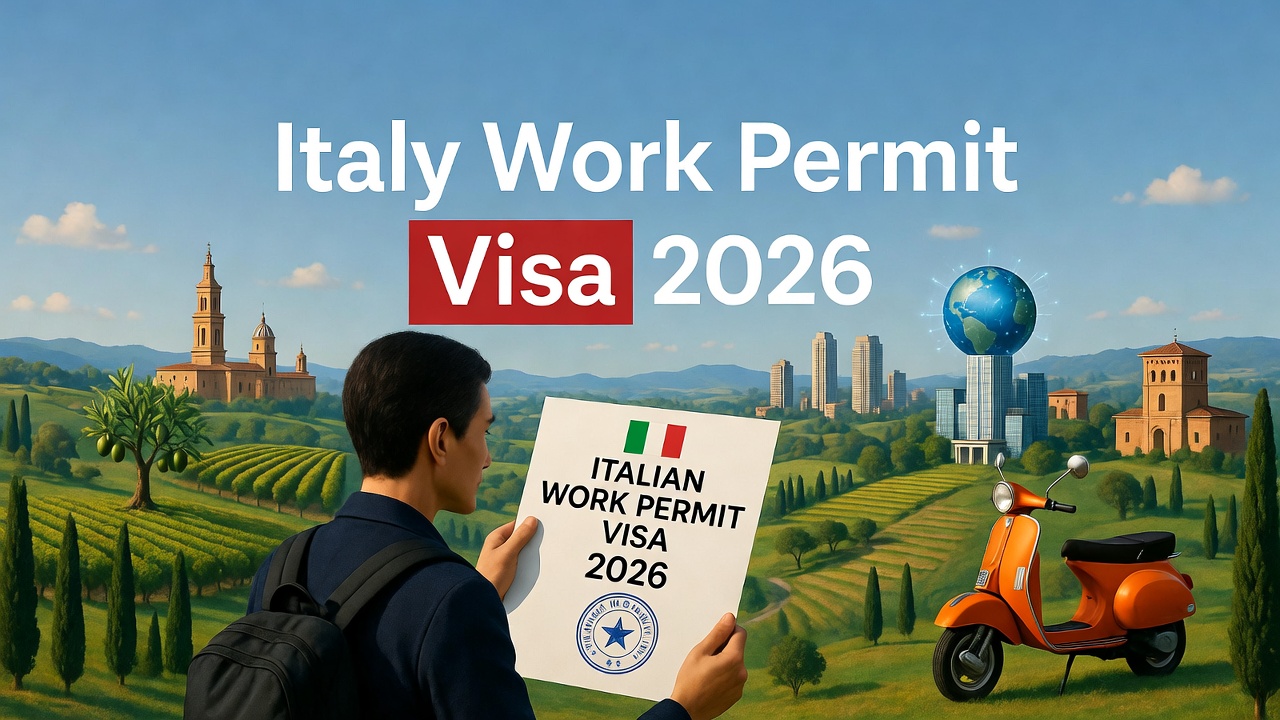
In 2026, Italy has opened generous opportunities through the Decreto Flussi 2026-2028, with 164,850 new work slots available this year alone — part of nearly 500,000 over three years. Whether you’re a software engineer, chef, vineyard worker, or startup founder, this comprehensive guide explains everything you need to know about the Italy work permit visa process, requirements, costs, and tips for success.
What Is an Italy Work Permit Visa?
The Italy work permit visa is a long-stay national visa (Type D) that allows non-EU/EEA/Swiss citizens to enter Italy for paid employment or self-employment exceeding 90 days. It is not a simple tourist visa — it requires employer sponsorship or a qualifying business plan and leads to a residence permit (permesso di soggiorno per lavoro) once you arrive.
Key distinction:
- The visa lets you enter Italy.
- The residence permit (applied for within 8 days of arrival) allows you to live and work legally for 1–2 years (renewable).
This system protects Italian and EU workers through quotas while welcoming talent in shortage sectors like agriculture, tourism, tech, healthcare, and engineering.
Who Needs an Italy Work Permit Visa?
If you are a non-EU citizen and plan to work in Italy for more than 90 days, you almost certainly need one. EU, EEA, and Swiss nationals enjoy free movement and do not require visas or permits.
Exceptions (no quota needed):
- Highly qualified workers under the EU Blue Card
- Intra-company transfers
- Certain executives and specialists (Article 27 of the Italian Immigration Law)
- Family members joining Italian/EU workers
US citizens in San Jose or elsewhere follow the same rules as other non-EU applicants and must apply through the nearest Italian Consulate (Los Angeles, San Francisco, or New York).
Types of Italy Work Visas and Permits in 2026
Italy offers several tailored pathways under the Italy work permit visa umbrella:
- Seasonal Work Visa (Lavoro Stagionale) Ideal for agriculture, tourism, hospitality, and farming. Valid up to 9 months (non-renewable in the same year). Part of Decreto Flussi quotas — around 88,000 slots in 2026 for seasonal roles. Click-day applications open in January/February.
- Subordinate (Employed) Work Visa For full-time or fixed-term jobs under the annual quotas. Employer must prove no suitable Italian/EU candidate exists (labour market test in many cases).
- EU Blue Card (Carta Blu) Fast-track for highly skilled professionals. Requires a university degree (or equivalent 5 years’ experience), a job offer with minimum gross salary of approximately €33,500 (2024 figure; check current threshold), and at least 6 months’ contract. Valid for 2 years (renewable). No quota limits — easier mobility across the EU after 18 months.
- Self-Employment Visa For freelancers, consultants, or business owners. Requires a detailed business plan, proof of financial resources (€500,000+ investment in some cases for economic interest visas), and often creates jobs for Italians.
- Italy Startup Visa Designed for innovative entrepreneurs. Your startup must be certified by the Italian Ministry of Economic Development. Offers fast processing and access to funding, co-working spaces, and tax incentives. Perfect for tech founders and creatives.
- Intra-Company Transfer (ICT) Visa For managers, specialists, or trainees moving within the same multinational company. Valid up to 3 years.
Choose the right category based on your skills and job offer — this is the foundation of a successful Italy work permit visa application.
Italy Work Permit Visa Eligibility Criteria
General requirements for all types:
- Valid passport (at least 3 months beyond planned stay)
- Clean criminal record
- Proof of sufficient accommodation in Italy
- Health insurance coverage (minimum €30,000)
- No threat to public order or security
Specifics by type:
- Employed/Seasonal: Binding job offer + employer nulla osta approval
- Blue Card: Higher education + salary threshold + highly qualified role
- Startup/Self-Employment: Approved business plan + financial proof + Italian economic benefit
Language skills are not always mandatory at application but Italian proficiency (B1 level) helps for renewals and daily life.
Required Documents for Italy Work Permit Visa
Prepare these originals plus certified translations (Italian or English):
- Completed visa application form (download from vistoperitalia.esteri.it)
- Recent passport-size photos
- Job contract or binding offer letter
- Employer’s nulla osta (work authorization)
- Proof of qualifications (diplomas, transcripts)
- Proof of accommodation and return travel funds
- Health insurance policy
- Criminal background certificate (apostilled)
For Blue Card or Startup: Additional proof of professional experience or innovative business plan.
Step-by-Step Application Process for Italy Work Permit Visa (2026)
- Secure a Job Offer Network on LinkedIn, use EURES, or contact Italian companies. The employer must be ready to sponsor you.
- Employer Applies for Nulla Osta The Italian employer submits the request online via the Ministry of Interior’s portal (ALI/Sportello Unico) during the Decreto Flussi “click days” (e.g., January for seasonal agriculture, February for tourism and non-seasonal). Quotas fill fast — act early in 2026!
- Apply for Type D Visa Once nulla osta is approved (usually 30–60 days), book an appointment at your local Italian Consulate/Embassy. Submit documents in person. Processing: 15–90 days.
- Enter Italy Collect your visa and travel within its validity (usually 6 months from nulla osta issuance).
- Apply for Residence Permit Within 8 days of arrival, submit the postal kit at a post office or go to the Questura/Prefettura. You’ll receive a receipt allowing you to start working immediately. Fingerprints and final card follow in weeks.
- Renew and Settle Renew before expiry. After 5 years, apply for long-term EU residence permit (carta di soggiorno).
Total timeline: 3–9 months from job offer to working legally.
Processing Times and Costs in 2026
- Visa issuance: 30 days (employment quotas) to 90 days (Blue Card/self-employment)
- Overall process: 2–6 months
- Fees: – National visa: €116 – Residence permit: €40–€100 + €76 administrative (postal kit, stamp, issuance) – Blue Card: Additional €50 fee
No hidden costs if you follow official channels. Always use the free vistoperitalia.esteri.it tool to confirm exact fees and forms.
Benefits of Obtaining an Italy Work Permit Visa
- Live in one of the world’s most beautiful countries with world-class healthcare and education
- Competitive salaries in tech (€40,000+), engineering, and hospitality
- EU Blue Card holders enjoy easier mobility to other EU countries
- Path to permanent residency after 5 years and Italian citizenship after 10 years
- Family reunification rights after 1 year
- Tax incentives for new residents (e.g., flat-tax regime for some expats)
Italy’s economy is booming in renewable energy, fashion, food tech, and tourism — perfect timing in 2026.
Common Challenges and Pro Tips for Success
Challenges: Bureaucracy, language barriers, and quota competition. Pro tips:
- Start early — quotas open in January 2026 for many categories
- Hire an immigration lawyer for complex cases (Blue Card or startups)
- Learn basic Italian via free apps like Duolingo
- Prepare all documents in advance and get them apostilled
- Use official government websites only — avoid unofficial agents promising “fast tracks”
- Network at Italian job fairs or through chambers of commerce in your country
For US applicants: The Italian Consulate in San Francisco or Los Angeles handles most West Coast applications smoothly.
Frequently Asked Questions (FAQs)
Can I apply for an Italy work permit visa without a job offer? No — almost all categories require a sponsoring employer or approved business plan.
How long can I stay on a seasonal Italy work permit visa? Maximum 9 months per year.
Is the EU Blue Card better than a standard work visa? Yes for highly skilled professionals — faster processing, EU-wide mobility, and higher salary potential.
Can my family join me? Yes, after you obtain the residence permit (usually after 1 year).
What happens if my application is rejected? You can appeal or reapply with stronger documents. Common reasons: incomplete paperwork or quota exhaustion.
Conclusion: Start Your Italian Dream Today
The Italy work permit visa in 2026 offers more opportunities than ever thanks to expanded Decreto Flussi quotas and streamlined digital processes. Whether you’re chasing seasonal sunshine in Tuscany vineyards or a high-tech career in Milan, Italy welcomes ambitious talent.
Take the first step: Update your CV, reach out to Italian employers, and bookmark vistoperitalia.esteri.it. With proper preparation, your Italy work permit visa journey can lead to a lifetime of la dolce vita.
Ready to move? Consult the official Italian Ministry of Foreign Affairs and Interior websites for the latest 2026 updates, or contact your nearest Italian consulate. Buona fortuna — Italy is waiting!