 Lekhapora BD
Germany stands out as one of Europe’s strongest economies, renowned for engineering excellence, innovation in tech and automotive sectors, robust healthcare, and high living standards. For non-EU/EEA citizens, the Germany work permit visa — officially a national Type D visa leading to a residence permit (Aufenthaltserlaubnis) for employment — opens doors to these opportunities.
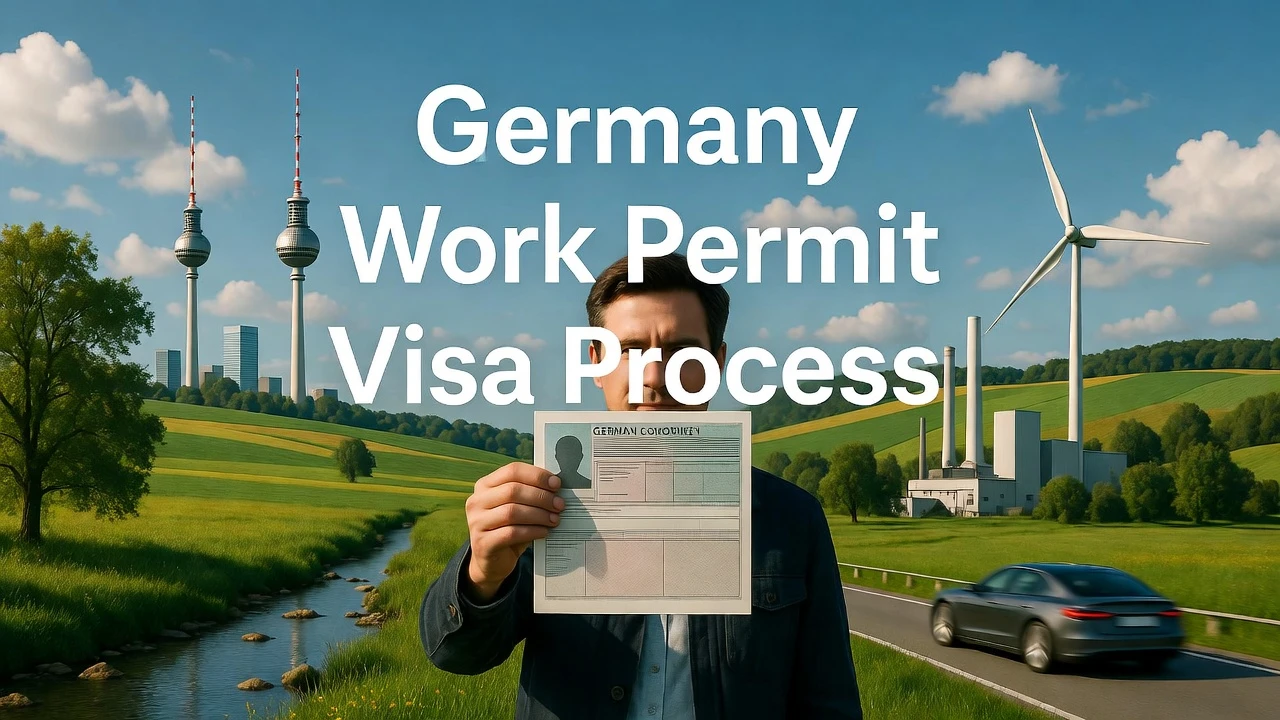
Germany actively recruits skilled talent through streamlined immigration rules, including the Skilled Immigration Act reforms. Whether you’re a software developer, engineer, nurse, mechanic, or recent graduate, this guide details the main types, eligibility, requirements, application steps, costs, and tips for success.
What Is a Germany Work Permit Visa?
The Germany work permit visa is a long-stay national visa (Type D) that allows non-EU nationals to enter Germany for qualified employment. Upon arrival, you convert it into a residence permit for work at the local foreigners’ authority (Ausländerbehörde). This permit authorizes legal residence and employment, typically for 1–4 years (renewable), and often leads to permanent residency after several years.
Key distinction:
- The visa enables entry.
- The residence permit allows you to live and work long-term.
EU/EEA/Swiss citizens enjoy free movement and need no visa or permit.
Who Needs a Germany Work Permit Visa?
Non-EU citizens generally require one for work exceeding 90 days. Exceptions apply to short business visits or specific agreements.
Citizens of Australia, Canada, Israel, Japan, New Zealand, South Korea, the UK, and the USA can enter visa-free and apply for the residence permit after arrival if they have a job offer.
Main Types of Germany Work Visas and Permits
Germany offers targeted pathways based on qualifications and job offers:
- EU Blue Card For highly qualified professionals with a university degree (or equivalent). Requires a job offer matching your qualification, at least 6 months duration, and a minimum gross annual salary (thresholds vary annually; lower for shortage occupations like IT, engineering, healthcare, and for recent graduates). Ideal for fast-tracked processing and EU mobility.
- Work Visa for Qualified Professionals (Skilled Workers) For those with recognized university degrees (Section 18b Residence Act) or vocational training qualifications (at least 2 years, Section 18a). Needs a concrete job offer in a qualified position. Qualifications must be comparable/recognized in Germany.
- Visa for IT Specialists Flexible option for IT professionals without formal degrees but with at least 3 years of comparable experience. Requires a job offer with appropriate salary.
- Opportunity Card (Chancenkarte) Points-based system for job seekers. Allows entry to search for qualified employment (or recognition measures) for up to 1 year. You can work part-time (up to 20 hours/week) and do job trials (max 2 weeks per employer). Points awarded for qualifications, experience, language skills, age, and ties to Germany.
- Other Specialized Permits
- Practical professional knowledge/experience-based employment.
- Intra-company transfers.
- Shortage occupations with eased rules.
Select the category matching your profile — most require a job offer except the Opportunity Card.
Eligibility Criteria
General requirements across types:
- Valid passport
- No criminal record (police certificate, often apostilled)
- Proof of accommodation
- Health insurance (travel or German coverage)
- Sufficient funds (if no immediate job income)
- No threat to public order
Specifics:
- Recognized/comparable qualification (use anabin database or ZAB statement)
- Binding job offer/contract (for employment visas)
- Salary meeting thresholds (especially for Blue Card)
- Language skills (often not mandatory initially but helpful for integration/PR)
Required Documents
Prepare originals + copies/translations (German/English):
- Completed visa application form
- Biometric passport photos
- Valid passport
- Job contract/offer letter
- Proof of qualifications (degrees, transcripts, recognition certificate)
- Employer declaration (if required)
- Proof of health insurance
- Proof of accommodation/financial means
- Police clearance certificate
- CV and motivation letter (sometimes)
For Blue Card/Opportunity Card: Additional salary proof or points evidence.
Step-by-Step Application Process
- Check Eligibility & Find a Job (or Prepare for Opportunity Card) Use portals like Make it in Germany, StepStone, LinkedIn, or EURES. For Opportunity Card, use the self-check tool.
- Gather & Recognize Qualifications Verify via anabin or apply for recognition (anerkennung-in-deutschland.de).
- Apply for National Visa (Type D) Book appointment at German embassy/consulate in your country (e.g., Dhaka for Bangladesh applicants). Submit documents. Employer can accelerate via fast-track in some cases.
- Visa Processing Typically 4–12 weeks (faster for Blue Card/shortage roles).
- Enter Germany Travel within visa validity.
- Apply for Residence Permit Within weeks of arrival, register at local residents’ office (Anmeldung) and apply at Ausländerbehörde. Biometrics, fees, and card issuance follow.
- Start Work & Renew Work legally. Renew before expiry; after 2–5 years (depending on type/language), apply for permanent residence.
Total timeline: 2–6 months from application to working.
Processing Times and Costs
- Visa: 4–12 weeks (priority for skilled roles)
- Residence permit: 4–8 weeks after arrival
- Fees: Visa ≈ €75; residence permit ≈ €100–110; Blue Card similar
Use official sites for exact amounts.
Benefits of a Germany Work Permit Visa
- Competitive salaries in engineering (€50,000+), IT, healthcare
- Excellent social security, healthcare, education
- Family reunification rights
- Path to permanent residency (often after 21–33 months with German skills) and citizenship
- EU Blue Card mobility to other EU countries
- Strong worker protections and work-life balance
Common Challenges and Pro Tips
Challenges: Bureaucracy, qualification recognition delays, language barriers. Tips:
- Start with official portals: make-it-in-germany.com, auswaertiges-amt.de
- Secure job offer early — many companies sponsor
- Learn basic German (A1–B1 helps integration)
- Get qualifications recognized early
- Avoid unofficial agents; use embassy appointments
- For Dhaka applicants: Check German Embassy Dhaka for local procedures
Frequently Asked Questions (FAQs)
Do I need a job offer for every work visa? Mostly yes — except Opportunity Card for job search.
How long is the Opportunity Card valid? Up to 1 year initially; extensions possible.
Is the EU Blue Card better? Yes for highly skilled — lower thresholds in shortages, faster PR path.
Can family join? Yes, spouses/partners get residence permits (often with work rights).
What if refused? Appeal or reapply with improvements.
Conclusion: Start Your German Career Journey
Germany’s work permit visa system prioritizes skilled talent, offering clear pathways from entry to settlement. With demand in tech, engineering, healthcare, and trades, opportunities abound.
Begin now: Visit make-it-in-germany.com for the Quick Check, search jobs, and contact the German embassy. With preparation, your Germany work permit visa can lead to a rewarding life in Europe.
Good luck — Germany welcomes skilled professionals!